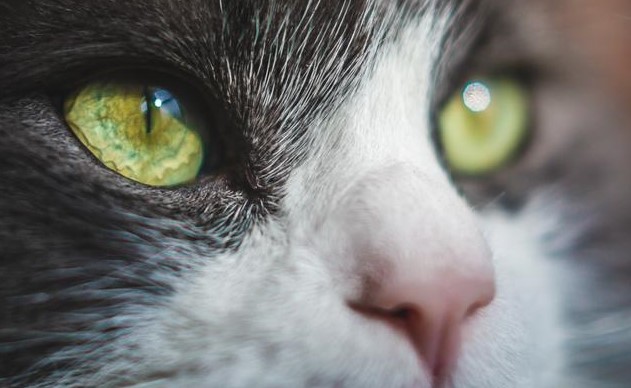
Ed Lane, Chattahoochee Hills, 2019
Lurking from behind the night shadows, the steely eyes of a wildcat, pierce through the darkness ready, like a steel pointed arrow on a bow at the hands of an experienced archer. They assess the weaknesses of its prey. Cat on the ready, deadly assault looms.
The attack is calculated, fearless, indomitable, and bloody.
Out of the sand dunes of the Sahara desert comes a child hanging off the leather straps of the last camel on a Bedouin caravan of twenty. At the last oasis the child filled his waterskin. He doesn’t know where he is going. He doesn’t know if he is for sale like other goods traded by the crusty, stoic, raspy Bedouins, or if he belongs by blood to the one that conducts the camel.
Dryness surrounds him, leather straps dangle from the harness, wind and sand blow, slow shadowy forms of the nineteen camels ahead prance in blinding desert sun, he exhales his surroundings. The straps from which he hangs are his only immediate security in life, failure of which, would fate him to another forgotten spec on sand withering away like dry skin.
The father’s (shall we assume the biological context?) linen drape down, flinging in the wind. They touch the boy’s face the only visible parental affinity in this surreal context. The caravan straddles dunes and firms its path along the trade route for another one thousand miles. The boy’s eyes flicker. Heretofore undaunted, even at such young age, his eyes spoke the language of ages.
The desert threatened to bury him into oblivion. While the world surrounded him, but for the straps and the camel conductor’s affirming linen, he would have gone to perdition. But his eyes spoke the language, the language of ages. It, the language of ages, pierced through the desolate landscape to speak resilience, confidence, and an undistinguishable notion of hope. Perhaps Joseph felt that way.
Why would his eyes flicker? One thousand miles, numerous sandstorms, waterskin from oasis to oasis (they are days apart), camel’s straps sagging and tiring, linen heavier with sand, the man said three words during the thirty-day journey. Did the boy eat? Did he say anything? Why was he there? Where were the Bedouins going? Where were they from?
What we see is always away from where we are.
Behind him, the footprints of twenty quadrupeds dug deep in the sand but quickly filled. They formed a winding trek that faded away from his eyes, as the caravan moved and sand filled the gaps, leaving only distant sketches quickly mixing up with desert mirage. He certainly had advantage of hindsight.
What was the path worth if nothing was left in it, except for an eventual carcass should someone or even him be taken up by the sand?
Well, a time came to flicker. But a time came to come. If he could just turn his steely eyes forward, and if the nineteen other camels did not obstruct his forward view. If his father’s linen (is it his father?), now heavy with sand, did not keep slapping on his face, and if the sandstorms did not blanket everything out, well then perhaps he would see something.
The lead camel made a rumbling growl. Metaphorically he could have made a grumbling howl because after one thousand ghastly miles, the looming silhouette of the citadel far ahead, spunked a gasp of dry sandy energy off his throat. The lead camel’s conductor could not have cared less. For an old craggy desert man, reality confounded with mirage, glee and anticipation had never taken residence in his way of life.
Not until the caravan strode through the city gates and voices rumbled the boy’s ears, did he, the boy, lighten up his gaze, and sharpened his retina.
Surely there is a future, and your hope will not be cut off. Hear, my son, and be wise, and direct your heart in the way. Be not among drunkards or among gluttonous eaters of meat, for the drunkard and the glutton will come to poverty, and slumber will clothe the with rags. Listen to your father who gave you life, and do not despise your mother when she is old. Prov 23:18-22
The Nouakchott citadel was glorious. Camels drank water, children played the pipe, men danced, children sang the dirge, men mourned. Twenty sacks filled with spices covered the ground at the busy merchant’s tent. Maybe he was the most successful in a marketplace that run for several lengths. But perhaps not, the next tent was busy, and the next.
Where did all these people come from? It was much for those steely eyes, yet they took it all in for him. There were many colors. The first bag had bright red peppers, the next something brown, the other yellow, green, brown again, whitish. The merchant with his drapes dangling down from around his waist and neck, and tight turban, hollered his goods, gesticulated energetically, and counted his coins. The boy could hear the clinking of heavy coins.
Contrasting with the howl of the wind from the last thirty days, marketplace noises evoked belonging. It didn’t matter that some people were just screaming at each other. Maybe they were simply haggling over a quarter of five cents for two hundred grams of dried dates.
People who wore knives and daggers strapped from their belts, appeared ominous while screaming at each other. The dispute could be an arm length and a lethal swift away from resolution. But it didn’t matter, the boy still belonged. At least he felt that way.
The leap of the cat angling for the jugular is not always swift or perfect but it is always eyed, focused, and sometimes lethal.
Let your eyes look directly forward, and your gaze be straight before you. Ponder the path of your feet: then all your ways will be sure. Do not swerve to the right of to the left; turn your foot away from evil. Prov 4: 25-27
 Lane's Latest